
With the advent of AI, the ability to manage and retrieve large amounts of data in an effective manner has become crucial. While relational databases can handle structured data quite effectively, AI requires the ability to comprehend the meaning of the data. It is here that vector databases come into play.
What is a Vector Database?
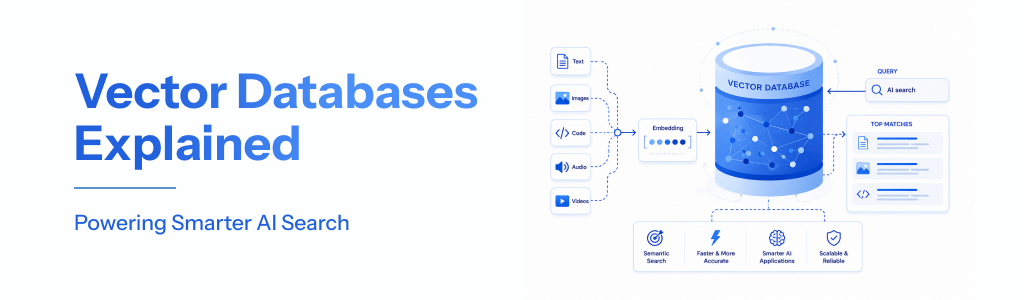
Vector databases store their data as vectors of numbers instead of rows and columns. Using vector embeddings to represent texts, images, audio, and other types of data allows AI models to recognize connections and patterns in data sets.
Key Benefits of Vector Databases
• Semantic Search: Provides results by meaning rather than exact matching of keywords.
• Fast Retrieval: Performs fast similarity search operations on large datasets.
• Integration with Artificial Intelligence: Provides use cases for chatbots, recommendation engine systems, and RAG.
• Scalability: Effectively manages vector embeddings in the range of millions.
Conclusion
Vector databases have emerged as an integral part of today’s AI architecture. By offering smart search and contextual comprehension capabilities, they can assist organizations in building quick and effective AI applications. With increasing adoption of AI technologies, vector databases will play an increasingly important role in future years to come.