

When building a software system, one of the earliest and most important decisions is choosing the right architecture. The choice between monolith and microservices isn’t just technical – it directly affects how your system scales, evolves, and performs over time.
What is a Monolithic Architecture?
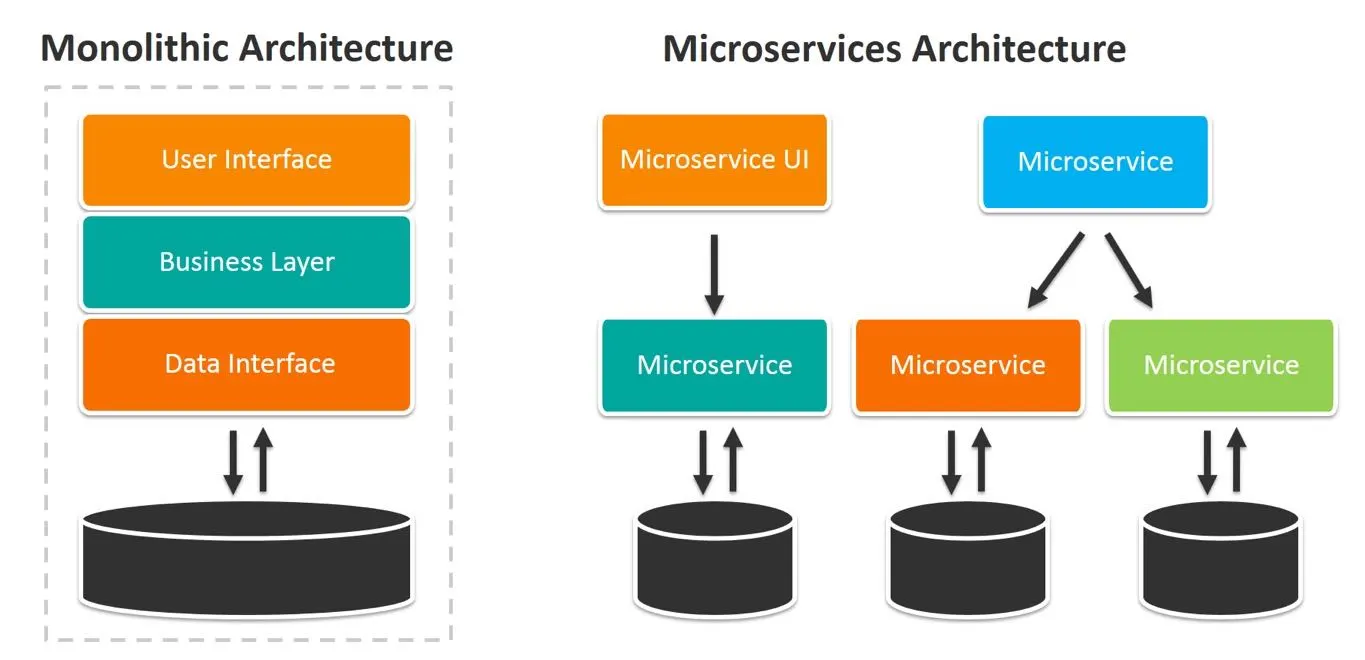
A monolithic application is built as a single unit where all components – UI, business logic, and database – are tightly connected and deployed together.
This approach works well in the early stages. It’s straightforward, easier to manage, and allows teams to move quickly without worrying about distributed system complexities.
Why teams choose monoliths:
• Simple to build and deploy
• Faster development for small teams
• Easier debugging since everything is in one place
However, as the application grows, even small changes can become risky and deployments start taking longer.
What are Microservices?
Microservices take a different approach by breaking the application into smaller, independent services. Each service handles a specific function and communicates with others through APIs.
This gives teams more flexibility, especially when systems become large and complex.
Why teams move to microservices:
• Scale only the parts that need it
• Deploy features independently
• Use different technologies for different services
That said, microservices come with their own challenges – like managing multiple services, handling communication, and setting up proper monitoring.
So, Which One Should You Choose?
There’s no universally “right” answer – it depends on your situation.
Go with a monolith if:
• You’re building an MVP or a small product
• Your team is small
• You need to move fast with minimal complexity
Consider microservices if:
• Your application is growing rapidly
• You have multiple teams working in parallel
• Scalability and flexibility are becoming critical
Final Take
Many successful systems actually start as monoliths and evolve into microservices over time. The key is not to over-engineer early, but to choose an architecture that fits your current needs while leaving room to grow.