
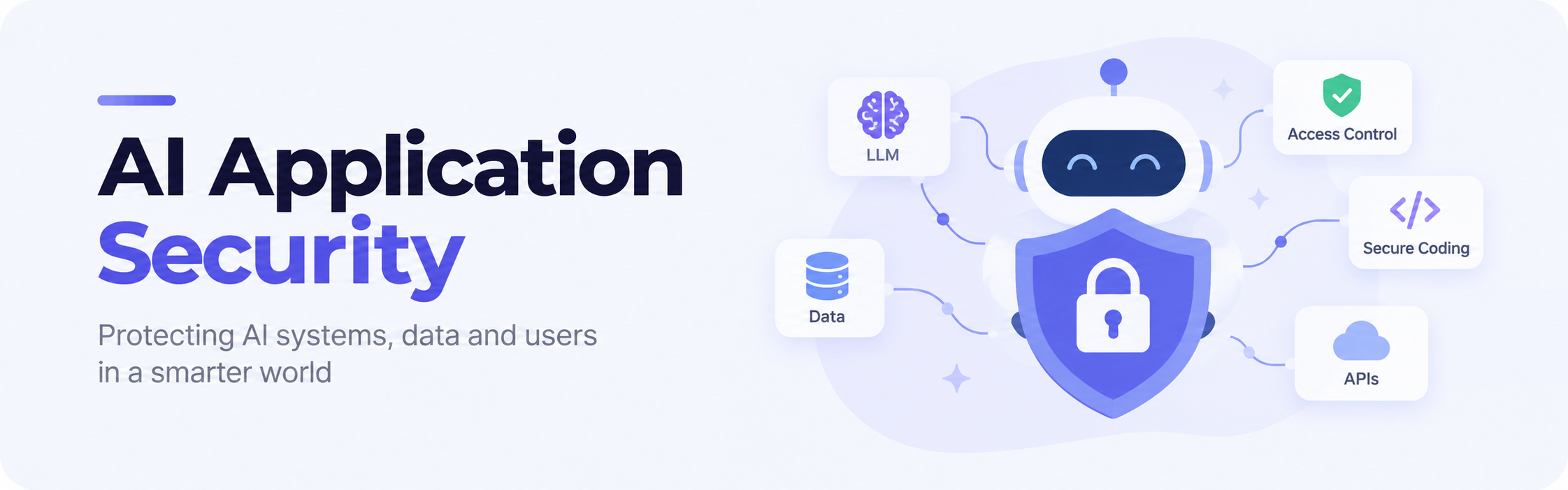
AI applications are becoming part of customer support, search, and coding. But once an AI system handles data or calls external tools, security becomes a bigger concern. A prompt is not enough. The application also needs protection.
What is AI Security Different?
Traditional applications have risks such as unauthorized access, insecure APIs, and data leaks. AI systems introduce additional problems because models can interpret untrusted instructions and generate unpredictable results.
For example, a chatbot connected to company documents might reveal information that a user should never see. An AI agent with access to APIs could also perform an action it was not supposed to perform.
Protect The Input
User input should never be treated as safe.
Developers should validate requests, detect suspicious patterns, limit input size, and use controls against prompt injection. The goal is to prevent untrusted instructions from changing application behavior.
Control Data Access
AI applications often work with private documents, customer information, or internal databases. The model should only receive information the user is authorized to access.
Authentication and authorization still matter. RAG systems, databases, and APIs should enforce their own access controls instead of relying on the LLM to decide what is allowed.
Be Careful With Tools
Tool use adds another security layer.
If an AI can call a payment API, update an account, or delete data, those actions need permissions and validation. Sensitive operations may require confirmation.
Validate the Output
AI-generated content should not be trusted just because it came from a model.
Applications should validate structured responses, sanitize generated content, and handle unexpected outputs before passing them to another system.
Monitor the Application
Security doesn’t end after deployment. Logging failed requests, unusual tool calls, permission errors, and suspicious activity can help teams detect problems quickly.
Final Take
AI security is not only about protecting the model. It is about protecting the application around it.
Authentication, authorization, input validation, data controls, safe tool access, output validation, and monitoring can make AI systems much harder to misuse. The smarter AI gets, the more important these boundaries become.