
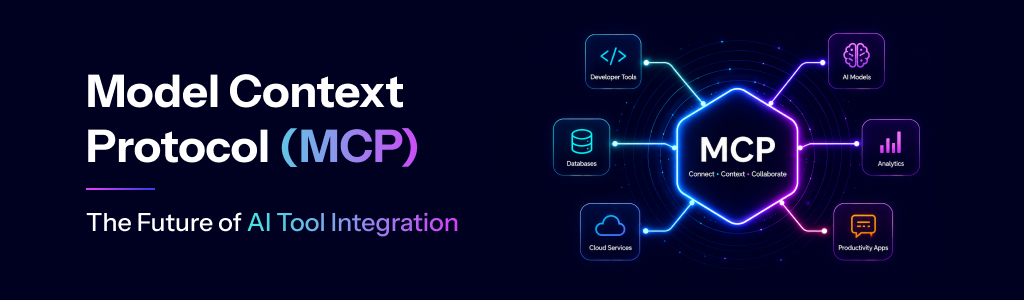
With the rising use of AI-driven applications, seamless connectivity between the AI model and other software becomes an important need. The Model Context Protocol (MCP) is fast becoming a standard protocol that enables smooth interoperability between the AI model and various other systems.
MCP Overview
The Model Context Protocol offers a standardized way through which AI models gain access to data and execute tasks from one system to another. The need to integrate each application separately becomes irrelevant, since MCP makes it possible to create a uniform integration platform for AI models.
Key Benefits Of MCP
Organizations can enhance AI adoption through:
• Streamlined Integration: Allows AI algorithms to work with several applications using one protocol.
• More Scalable Architecture: Allows expansion of AI systems without having to integrate them manually.
• Higher Efficiency: Provides an opportunity for AI bots to work with necessary data and complete tasks.
• Improved Interoperability: Ensures effective communication between different applications.
• Less Time-Consuming Development:Lowers development efforts significantly.
Challenges To Consider
• Standardization across diverse systems.
• Security and access control requirements.
• Integration with legacy applications.
• Governance of AI-driven actions and data access.
Conclusion
MCP will be playing an integral part in designing the future for AI tools by establishing a safe standard platform for AI systems to work on while interacting with external services. With increasing adoption of AI in enterprises, it’s time for MCP to play its part in intelligent applications.