
As applications grow, one thing becomes clear – handling everything through direct API calls doesn’t always scale well. Systems start getting tightly coupled, changes become risky, and adding new features feels slower than it should. This is where Event-Driven Architecture (EDA) starts to make a real difference.
Instead of services constantly calling each other, EDA allows them to communicate through events. An event is simply something that has already happened – like a user signing up, an order being placed, or a payment being completed. Once that event is published, other services can react to it without being directly connected.
How It Works in Practice
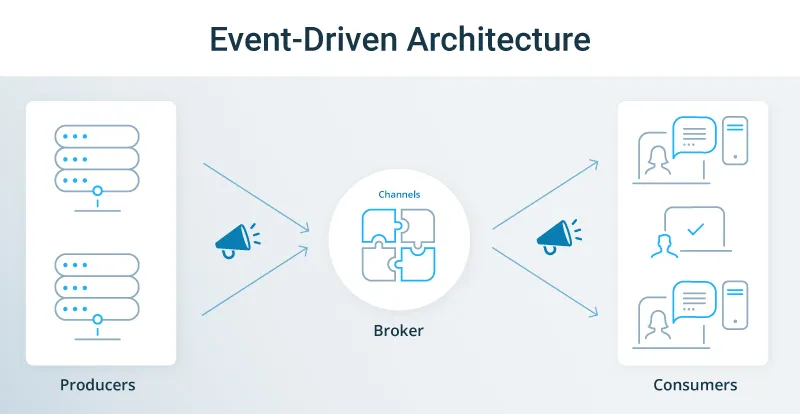
A typical event-driven system has three parts:
• Producers: The services that generate events
• Brokers: Systems like Kafka or RabbitMQ that pass events around
• Consumers: Services that listen and take action
For example, when an order is placed, the order service emits an event. The payment, inventory, and notification services can all respond to that event independently. None of them need to directly call each other – and that’s where the real flexibility comes in.
Why Teams Are Moving Toward EDA
The biggest advantage of EDA is how loosely everything is connected. You can update or scale one service without worrying too much about breaking others.
It also helps with:
• Scalability: Scale only the services under load
• Flexibility: Add new consumers without touching existing code
• Resilience: Failures stay isolated instead of cascading
Where It’s Actually Used
You’ll see event-driven systems in places where real-time processing matters:
• E-commerce platforms handling orders and notifications
• Payment systems tracking transactions instantly
• Streaming platforms processing continuous data
• IoT systems reacting to device-generated events
When It Makes Sense
EDA is a good fit when your system is growing, handling a lot of events, or needs to respond in real time. It’s especially useful in microservices setups where keeping services independent is important.
Final Take
Event-Driven Architecture isn’t about replacing everything you already have – it’s about designing systems that are easier to scale and evolve. As applications become more distributed, thinking in terms of events rather than direct calls often leads to cleaner and more adaptable systems.